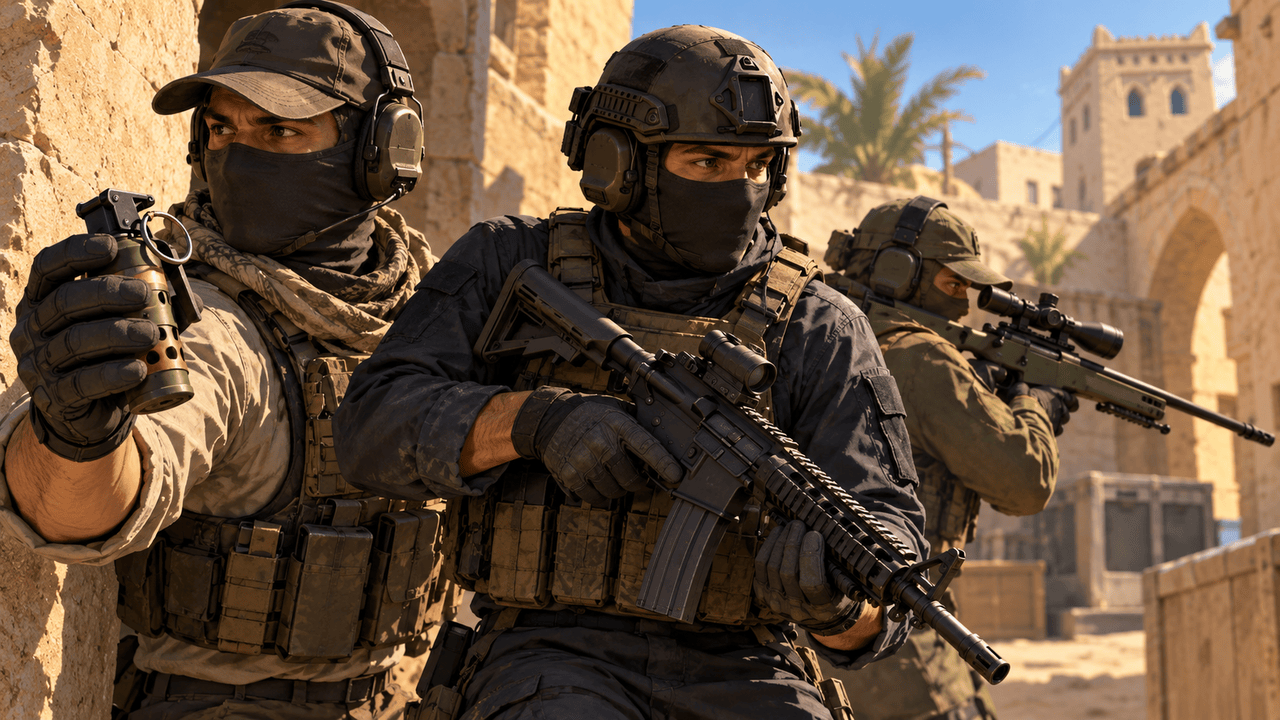
Teamwork in CS2 comes down to whether players can use one another’s actions effectively. An entry player takes first contact, a teammate supplies a flash, and another stays ready to follow up. These responsibilities connect through timing and positioning. A player can know a grenade line-up or win a difficult duel while the rest of the team remains unable to help. Learning competitive play means understanding those connections alongside practising individual mechanics.
For everyday ranked players, a useful starting point is to agree on what each player is trying to make possible. That includes who takes space, who supports the move, and who watches another route. Communication keeps those jobs aligned as information changes. Map knowledge helps each teammate understand where support can arrive from, which angles need attention, and how a position connects to the next part of the round.
Agree what each player is enabling
Professional CS2 gives ranked players examples of these relationships at a more rehearsed level. When watching the top Counter-Strike teams today, pay attention to the teammates supporting each engagement. Follow who can help the player taking contact and who remains responsible for another part of the map. Some contributions become clearer through the positions that teammates hold than through the player’s kill total.
Refrag’s May 2025 guide to CS2 roles lists donk as Spirit’s entry fragger and sh1ro as its AWPer. Those descriptions distinguish taking space through first contact from controlling sightlines with the AWP sniper rifle. Responsibilities can overlap: support includes throwing grenades, collectively called utility, and preparing to trade. A ranked group can share these tasks without assigning everyone a permanent professional title.
Keep the agreement practical. Establish who is making the initial call, who is available to support the next engagement, and which areas still need watching. A role should give teammates an understandable expectation of your contribution. Calling yourself a support player provides little direction unless the group knows what help is available.
Separate information from instructions. Reporting an opponent’s position tells the group what is known; calling an attack asks teammates to commit. Distinguishing those messages helps players understand whether to update their view of the map or prepare to move together. Distinguish confirmed information from your assumptions.
Make first contact tradeable
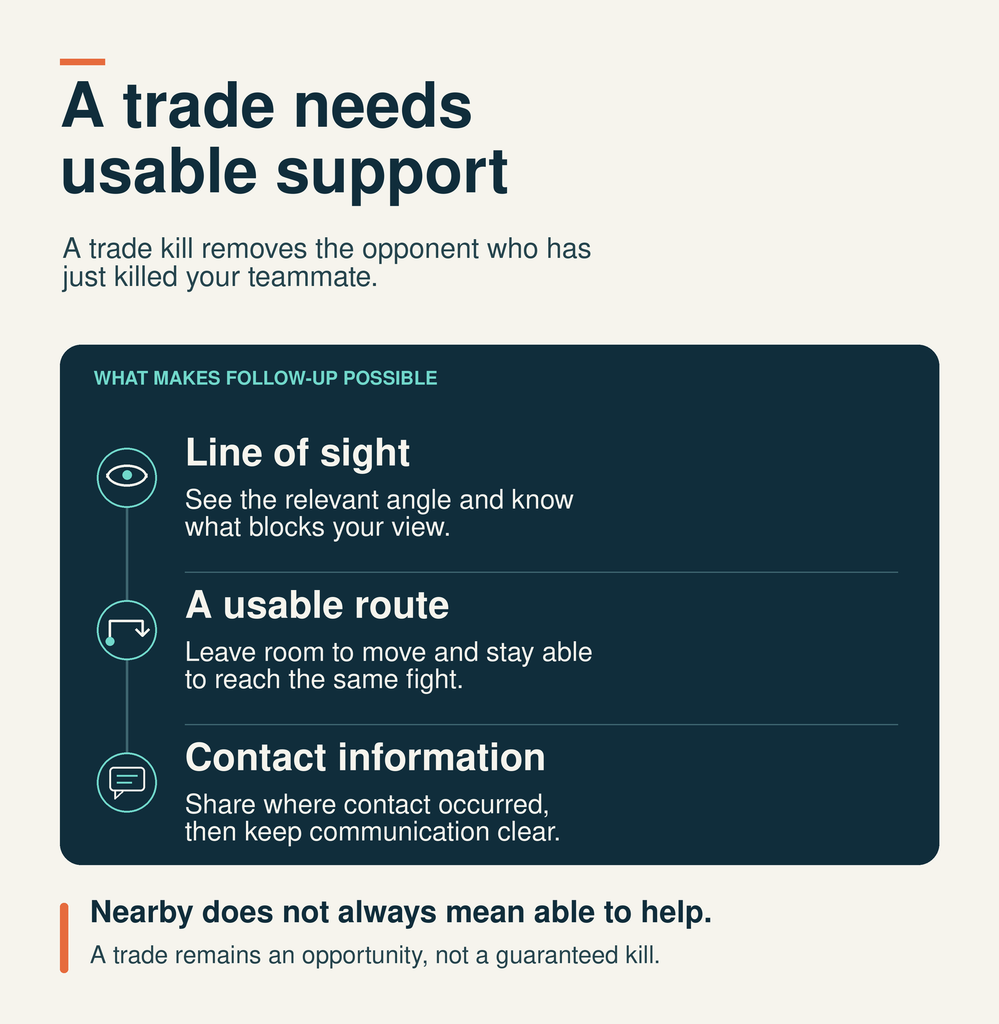
A trade kill eliminates the opponent who has just killed your teammate. The supporting player needs a position from which they can respond to that contact. Following the same route is only part of the job; the relevant angle must also be visible and reachable.
Leetify’s explanation of trade opportunities treats access to a follow-up fight as an advantage in its analysis of real round outcomes. Being near a teammate and being able to help them are different things. Walls, uncleared angles, and attention directed elsewhere can prevent a response despite close positioning.
Spacing should preserve room to move while keeping support available. There is no single distance that suits every doorway, corner, and open area. Look at the angle your teammate is approaching and the route you need to follow them. Explain when your position prevents you from helping, so their decision reflects the support they actually have.
The first player also contributes to the follow-up. Clear information about where contact occurred helps the next teammate direct their attention. After dying, give the relevant information briefly and leave space for the surviving players to hear and communicate. Trading remains an opportunity, rather than a guaranteed kill, and chasing a response without usable information can create another unsupported fight.
Connect map knowledge with utility
Map knowledge gives these agreements a physical basis. Knowing the names of locations helps communicate where the action is happening; understanding the routes and sightlines explains what teammates can do from there. Useful support depends on both. A player throwing utility needs to understand the area being affected and the positions from which teammates intend to act. Earlier information can become outdated. Keep track of when a route was last checked rather than treating an earlier clear area as permanently safe.
A smoke blocks a sightline, while a flash disrupts an opponent’s vision. The team still needs to connect that effect with movement. Communicate the intended flash before throwing it and establish that the player taking the fight is ready. Teammates also need enough information to avoid being blinded by their own support.
Learning a line-up therefore involves more than remembering where to stand and aim. Understand which position the grenade affects, what it leaves exposed, and how the thrower rejoins the team. That turns map knowledge into a shared action, rather than a piece of isolated knowledge.
The same awareness applies on defence. Holding a bombsite includes managing cover, using defensive utility, and communicating pressure so teammates can respond. Staying alive can preserve information and give support time to arrive. A defender’s contribution therefore extends beyond the number of opponents they eliminate.
Keep responsibilities flexible
Responsibilities change as players move, utility is used, and teammates are eliminated. The person who supported the opening can become the player taking the next contact. Information from another part of the map can also change the original plan.
Make those changes clear enough for teammates to act on. State what you can still cover and what support you need before committing to the next move. The practical measure of a role is whether the team understands what happens next and who can help make it happen.
PakarPBN
A Private Blog Network (PBN) is a collection of websites that are controlled by a single individual or organization and used primarily to build backlinks to a “money site” in order to influence its ranking in search engines such as Google. The core idea behind a PBN is based on the importance of backlinks in Google’s ranking algorithm. Since Google views backlinks as signals of authority and trust, some website owners attempt to artificially create these signals through a controlled network of sites.
In a typical PBN setup, the owner acquires expired or aged domains that already have existing authority, backlinks, and history. These domains are rebuilt with new content and hosted separately, often using different IP addresses, hosting providers, themes, and ownership details to make them appear unrelated. Within the content published on these sites, links are strategically placed that point to the main website the owner wants to rank higher. By doing this, the owner attempts to pass link equity (also known as “link juice”) from the PBN sites to the target website.
The purpose of a PBN is to give the impression that the target website is naturally earning links from multiple independent sources. If done effectively, this can temporarily improve keyword rankings, increase organic visibility, and drive more traffic from search results.